can't find what you're looking for?
Call us on 01792 818 538 or fill out the form below and one of our team will get back to you as soon as possible
Thank You.
Call us on 01792 818 538 or fill out the form below and one of our team will get back to you as soon as possible
Thank You.


155kW Style 52kWh 5dr Auto
Images for illustration purposes only.


150kW Charger
22m
100kW Charger
33m
50kW Charger
1hrs 6m
7kW Charger
7hrs 51m
Disclaimer: Charging speeds are estimates and are based on assumptions so should only be used for general comparative purposes. Actual charging rates and speeds depend on vehicle charging ability, ’useable’ battery, energy loss and current state of charge as charging speeds can decline at around 80%.
You might have been unimpressed by the first generation of compact, relatively affordable small electric cars, most of them SUV crossovers. We can understand why that might be. So what will the next generation of models like this be like? To that question, Volkswagen's ID.Cross reveals a few answers. Like the ID.Polo, it's part of the VW Group's 'electric urban car' family group of models based on that conglomerate's latest MEB+ platform for small EVs of this type. That portfolio already includes two crossovers, the Skoda Eqiq and the CUPRA Raval. The ID.Cross is more SUV-like than either of those, essentially a zero emissions alternative to Volkswagen's petrol-powered T-Cross. Though built far from Wolfsburg in Pamplona, Spain, the ID.Cross is a poster child for the German brand's latest 'new Volkswagen' strategy based around familiar body styles, easily-understood names and more analogue-style user-friendly cabin design. It's all quite different from the futuristic approach taken with the marque's first wave of electric models, cars like the ID.3 and ID.4. Let's take a closer look.
Unlike early ID models, there's an on/off button to activate the powertrain. But there'll be familiar thrust of electric torque away from rest. As you'd expect, all the powertrain engineering is shared with the ID.Polo (and the Skoda Epiq and CUPRA Raval). Which means a choice of 37kWh lithium-iron-phosphate or 52kWh nickel-manganese-cobalt batteries. And an APP290 e-motor available in three states of tune - 116PS or 135PS with the smaller battery; or 211PS with the larger one. The smaller battery is rated at up to 196 miles between charges; with the bigger one, that figure rises to 271 miles. There's always just a single front-mounted motor. In an SUV, you might wonder whether a twin motor drivetrain might be available, but the MEB+ platform doesn't allow for that. At just over 1,500kg in kerb weight, the ID,Cross is super-light for an electric SUV of this class and that will help when it comes to ride comfort and acceleration. And braking, which is managed by a clever regenerative system that monitors how hard you're pushing the brake pedal and then decides whether to apply retardation using the regen system or the wheel discs. It will usually be the regen system because that can pull up to 2.2g from regen alone. There are also drive modes, but all they do apart from tweaking the climate system is to sharpen or slacken throttle response. Handling should be virtually exactly the same comfort-orientated set-up as in the ID.Polo courtesy of much the same 55% front / 45% rear weight distribution. There's no independent rear suspension arrangement, but the torsion beam system is quite sophisticated, featuring two component bushings with a high stiffness in longitudinal movement that allows for a soft ride. Towing capacity is up to 1,200kg.
If you've owned a Volkswagen T-Cross or a similar compact combustion SUV of that type, you'll feel quite at home with an ID.Cross. It's after all much the same size, at 4,153mm long, though there's 50mm more wheelbase length than a T-Cross - and big wheels, 17 to 20-inches in size. The front end is supposed to resemble a face, with headlamps as 'eyes' above a 'smile'. Other likeable exterior details include the 'floating' roof created by the dark B and C-pillars, the latter with body-coloured flashing strips. Surprisingly though, there's no contrast-coloured roof option. There are full-width light bars front and rear. And the 'whiskey tumbler'-effect 3D tail lights are carried over from the ID.Polo. Volkswagen design director Andreas Mindt says the interior was created 'to feel like a friend' - which is perhaps why early prototypes came with a eucalyptus plant in the dashboard (a bit like the flower vase in the New Beetle). That feature was dropped for production, but individualistic touches remain, like the 'squarical' steering wheel, through which you view an 11.25-inch instrument screen that can be dressed up to look like the binnacles from an old MK! Golf. How many ID.Cross customers will remember a VW hatch from fifty years ago? We'll find out. Basically, as you'd expect, the front-of-cabin architecture is broadly carried over from the ID.Polo, which means a return to proper physical buttons on the steering wheel and dashboard, instead of touchscreen controls and haptic switches. There are physical climate controls too. And also a small rotary controller on the centre console that you can use for media features. The fabric-trimmed lower dashboard section, the twin screens (the centre one 13.0-inches in size) and the steering wheel are all the same as the ID.Polo, but the dashboard's upper section is taller and has chunky vertical vents. The rear seat has room for a couple of six-foot adults and the flat floor would allow a child to squeeze in between. The 475-litre boot (36-litres bigger than an ID.Polo) is decently sized and 20-litres bigger than a T-Cross. Like the ID.Polo, it has a deep underfloor section. With the rear seats flat, there's up to 1,345-litres of space.
This car will be pitched just above its ID.Polo supermini stablemate, which will mean a price span in the £25,000 to £35,000 bracket. With the smaller 37kWh battery, around £1,000 is necessary to progress from the feebler 116PS motor to the beefier 135PS unit. You'll probably need to pay from just over £29,000 for an ID.Cross with the larger 52kWh battery (which can only be had with a 211PS motor) but that larger battery is at least likely to qualify for a £1,500 government ECG grant. There are three ID.Cross trim levels - 'Life', 'Trend' and 'Style'. Most sales will be of 'Life' or 'Style'-spec variants and there are safety features like lane assist and blind spot warning. 'Life' spec includes features like a rear parking camera, adaptive cruise control and a wireless 'phone charging mat. Plusher 'Style'-spec adds LED matrix headlights, sport comfort seats and climate-control. Luxury options include features like a panoramic glass roof, electrically-adjustable front seats and a 425-watt 10-speaker Harmon Kardon audio system upgrade. If you've enough in your budget, you can add equipment items that you might not expect to find in this class of car. Like Volkswagen's semi-autonomous 'Connected Travel Assist' drive system (which can even bring the car to a halt at red traffic lights); and massaging front seats. There's also lots of auto-parking tech, including a set-up that learns previous manoeuvres (say into your tight garage) and can automatically repeat them; and one allowing you to stand outside the car and park it with your smartphone.
As we said when reviewing the other MEB+ VW Group 'Urban Family' models, charging is the one area where this design doesn't feel very advanced. The DC charging speed of the 37kWh battery is just 90kW and even the 52kWh battery can only manage up to 105kW. Still, a 10-80% DC-charge of the smaller battery can be done in 27 minutes; it's 24 minutes with the larger battery. Home AC charging from a single phase 7.4kw wallbox takes around 6 hours with the smaller battery and about 8 hours 30 minutes with the larger one - that's for a full charge. With the 37kWh ID.Cross, you can reduce your full charge time down to about 4 hours if you're able to AC charge using a three-phase 11kW wallbox. With that 11kW AC wallbox, the full charging time for a 52kWh ID.Cross would be about 5 hours 30 minutes. As you'd expect, these are the same figures as you'd get with the equivalent CUPRA and Skoda versions of this MEB+ design. As usual, charging can be controlled via the centre screen or by using the company's smartphone app. The ID.Cross can also offer bi-directional charging to feed energy back into the grid (though we can't really imagine many occasions on which you'd want to). And this Volkswagen can be specified with a V2L charger to power up your gadgets from the car's drive battery. The Wolfsburg maker says that its aim is to make sure that the battery pack lasts as long as the car and, sure enough, that battery pack is warrantied to have at least 70% of its usable capacity after eight years or 100,000 miles.
Volkswagen has now at last understood that EVs don't have to be revolutionary or divisively futuristic. If that sounds in principle like a step backwards, it won't feel like it when you get to grips with an ID.Cross. The things you want to be familiar - the exterior look, the cabin functionality - are indeed an easy adjustment. And the things you want to be advanced - like drive range and media technology - are indeed advanced. As with the ID.Polo, we love the huge boot and the charming design touches. And it's all delivered here in a more family-friendly package that doesn't cost a lot more than that EV supermini model. So Europe's fighting back against the Chinese invasion. It'll be interesting to see what happens next.
Images for illustration purposes only.
150kW Charger
22m
100kW Charger
33m
50kW Charger
1hrs 6m
7kW Charger
7hrs 51m
Disclaimer: Charging speeds are estimates and are based on assumptions so should only be used for general comparative purposes. Actual charging rates and speeds depend on vehicle charging ability, ’useable’ battery, energy loss and current state of charge as charging speeds can decline at around 80%.
You might have been unimpressed by the first generation of compact, relatively affordable small electric cars, most of them SUV crossovers. We can understand why that might be. So what will the next generation of models like this be like? To that question, Volkswagen's ID.Cross reveals a few answers. Like the ID.Polo, it's part of the VW Group's 'electric urban car' family group of models based on that conglomerate's latest MEB+ platform for small EVs of this type. That portfolio already includes two crossovers, the Skoda Eqiq and the CUPRA Raval. The ID.Cross is more SUV-like than either of those, essentially a zero emissions alternative to Volkswagen's petrol-powered T-Cross. Though built far from Wolfsburg in Pamplona, Spain, the ID.Cross is a poster child for the German brand's latest 'new Volkswagen' strategy based around familiar body styles, easily-understood names and more analogue-style user-friendly cabin design. It's all quite different from the futuristic approach taken with the marque's first wave of electric models, cars like the ID.3 and ID.4. Let's take a closer look.
Unlike early ID models, there's an on/off button to activate the powertrain. But there'll be familiar thrust of electric torque away from rest. As you'd expect, all the powertrain engineering is shared with the ID.Polo (and the Skoda Epiq and CUPRA Raval). Which means a choice of 37kWh lithium-iron-phosphate or 52kWh nickel-manganese-cobalt batteries. And an APP290 e-motor available in three states of tune - 116PS or 135PS with the smaller battery; or 211PS with the larger one. The smaller battery is rated at up to 196 miles between charges; with the bigger one, that figure rises to 271 miles. There's always just a single front-mounted motor. In an SUV, you might wonder whether a twin motor drivetrain might be available, but the MEB+ platform doesn't allow for that. At just over 1,500kg in kerb weight, the ID,Cross is super-light for an electric SUV of this class and that will help when it comes to ride comfort and acceleration. And braking, which is managed by a clever regenerative system that monitors how hard you're pushing the brake pedal and then decides whether to apply retardation using the regen system or the wheel discs. It will usually be the regen system because that can pull up to 2.2g from regen alone. There are also drive modes, but all they do apart from tweaking the climate system is to sharpen or slacken throttle response. Handling should be virtually exactly the same comfort-orientated set-up as in the ID.Polo courtesy of much the same 55% front / 45% rear weight distribution. There's no independent rear suspension arrangement, but the torsion beam system is quite sophisticated, featuring two component bushings with a high stiffness in longitudinal movement that allows for a soft ride. Towing capacity is up to 1,200kg.
If you've owned a Volkswagen T-Cross or a similar compact combustion SUV of that type, you'll feel quite at home with an ID.Cross. It's after all much the same size, at 4,153mm long, though there's 50mm more wheelbase length than a T-Cross - and big wheels, 17 to 20-inches in size. The front end is supposed to resemble a face, with headlamps as 'eyes' above a 'smile'. Other likeable exterior details include the 'floating' roof created by the dark B and C-pillars, the latter with body-coloured flashing strips. Surprisingly though, there's no contrast-coloured roof option. There are full-width light bars front and rear. And the 'whiskey tumbler'-effect 3D tail lights are carried over from the ID.Polo. Volkswagen design director Andreas Mindt says the interior was created 'to feel like a friend' - which is perhaps why early prototypes came with a eucalyptus plant in the dashboard (a bit like the flower vase in the New Beetle). That feature was dropped for production, but individualistic touches remain, like the 'squarical' steering wheel, through which you view an 11.25-inch instrument screen that can be dressed up to look like the binnacles from an old MK! Golf. How many ID.Cross customers will remember a VW hatch from fifty years ago? We'll find out. Basically, as you'd expect, the front-of-cabin architecture is broadly carried over from the ID.Polo, which means a return to proper physical buttons on the steering wheel and dashboard, instead of touchscreen controls and haptic switches. There are physical climate controls too. And also a small rotary controller on the centre console that you can use for media features. The fabric-trimmed lower dashboard section, the twin screens (the centre one 13.0-inches in size) and the steering wheel are all the same as the ID.Polo, but the dashboard's upper section is taller and has chunky vertical vents. The rear seat has room for a couple of six-foot adults and the flat floor would allow a child to squeeze in between. The 475-litre boot (36-litres bigger than an ID.Polo) is decently sized and 20-litres bigger than a T-Cross. Like the ID.Polo, it has a deep underfloor section. With the rear seats flat, there's up to 1,345-litres of space.
This car will be pitched just above its ID.Polo supermini stablemate, which will mean a price span in the £25,000 to £35,000 bracket. With the smaller 37kWh battery, around £1,000 is necessary to progress from the feebler 116PS motor to the beefier 135PS unit. You'll probably need to pay from just over £29,000 for an ID.Cross with the larger 52kWh battery (which can only be had with a 211PS motor) but that larger battery is at least likely to qualify for a £1,500 government ECG grant. There are three ID.Cross trim levels - 'Life', 'Trend' and 'Style'. Most sales will be of 'Life' or 'Style'-spec variants and there are safety features like lane assist and blind spot warning. 'Life' spec includes features like a rear parking camera, adaptive cruise control and a wireless 'phone charging mat. Plusher 'Style'-spec adds LED matrix headlights, sport comfort seats and climate-control. Luxury options include features like a panoramic glass roof, electrically-adjustable front seats and a 425-watt 10-speaker Harmon Kardon audio system upgrade. If you've enough in your budget, you can add equipment items that you might not expect to find in this class of car. Like Volkswagen's semi-autonomous 'Connected Travel Assist' drive system (which can even bring the car to a halt at red traffic lights); and massaging front seats. There's also lots of auto-parking tech, including a set-up that learns previous manoeuvres (say into your tight garage) and can automatically repeat them; and one allowing you to stand outside the car and park it with your smartphone.
As we said when reviewing the other MEB+ VW Group 'Urban Family' models, charging is the one area where this design doesn't feel very advanced. The DC charging speed of the 37kWh battery is just 90kW and even the 52kWh battery can only manage up to 105kW. Still, a 10-80% DC-charge of the smaller battery can be done in 27 minutes; it's 24 minutes with the larger battery. Home AC charging from a single phase 7.4kw wallbox takes around 6 hours with the smaller battery and about 8 hours 30 minutes with the larger one - that's for a full charge. With the 37kWh ID.Cross, you can reduce your full charge time down to about 4 hours if you're able to AC charge using a three-phase 11kW wallbox. With that 11kW AC wallbox, the full charging time for a 52kWh ID.Cross would be about 5 hours 30 minutes. As you'd expect, these are the same figures as you'd get with the equivalent CUPRA and Skoda versions of this MEB+ design. As usual, charging can be controlled via the centre screen or by using the company's smartphone app. The ID.Cross can also offer bi-directional charging to feed energy back into the grid (though we can't really imagine many occasions on which you'd want to). And this Volkswagen can be specified with a V2L charger to power up your gadgets from the car's drive battery. The Wolfsburg maker says that its aim is to make sure that the battery pack lasts as long as the car and, sure enough, that battery pack is warrantied to have at least 70% of its usable capacity after eight years or 100,000 miles.
Volkswagen has now at last understood that EVs don't have to be revolutionary or divisively futuristic. If that sounds in principle like a step backwards, it won't feel like it when you get to grips with an ID.Cross. The things you want to be familiar - the exterior look, the cabin functionality - are indeed an easy adjustment. And the things you want to be advanced - like drive range and media technology - are indeed advanced. As with the ID.Polo, we love the huge boot and the charming design touches. And it's all delivered here in a more family-friendly package that doesn't cost a lot more than that EV supermini model. So Europe's fighting back against the Chinese invasion. It'll be interesting to see what happens next.
call us now for flexible terms and best offers!
monthly from.
cash from.
from £366.39 pcm inc VAT
from £305.33 pcm + VAT
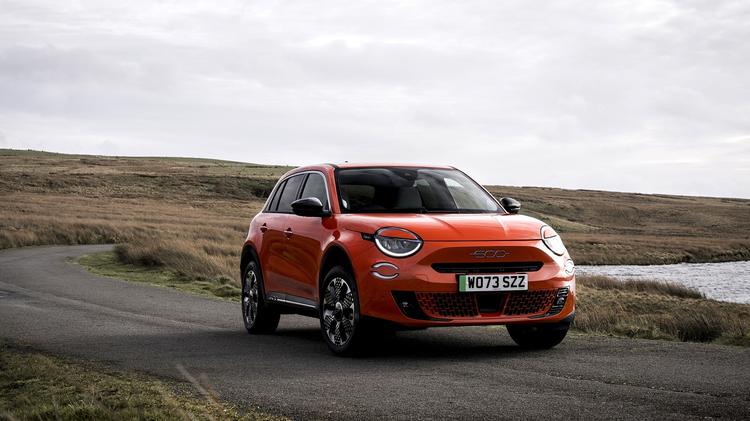
115kW La Prima 54kWh 5dr Auto

from £443.97 pcm inc VAT
from £369.98 pcm + VAT
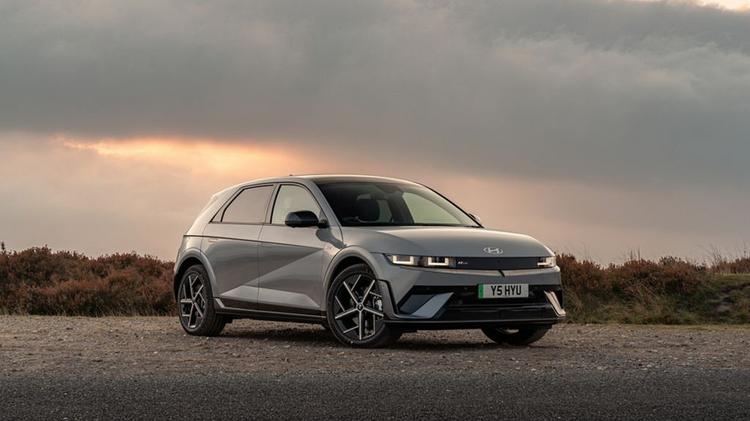
HYUNDAI IONIQ 5 ELECTRIC HATCHBACK.
125kW Advance 63 kWh 5dr Auto
from £534.84 pcm inc VAT
from £445.70 pcm + VAT
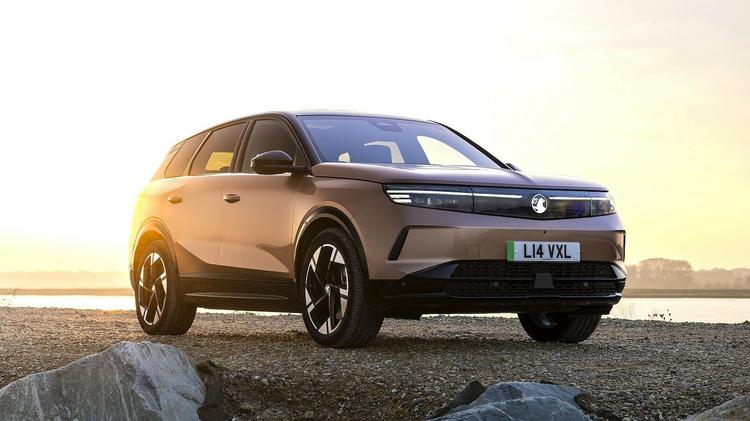
VAUXHALL GRANDLAND ELECTRIC HATCHBACK.
157kW Design 73kWh 5dr Auto
from £539.87 pcm inc VAT
from £449.88 pcm + VAT
.jpg)
157kW E-TENSE Pallas 61kWh 5dr Auto
from £371.41 pcm inc VAT
from £323.87 pcm + VAT
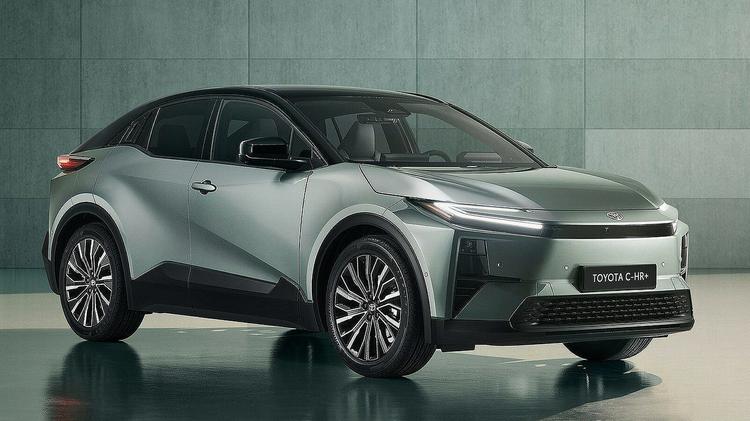
TOYOTA C-HR+ ELECTRIC HATCHBACK.
123kW Icon 58kWh 5dr Auto
from £338.80 pcm inc VAT
from £286.99 pcm + VAT
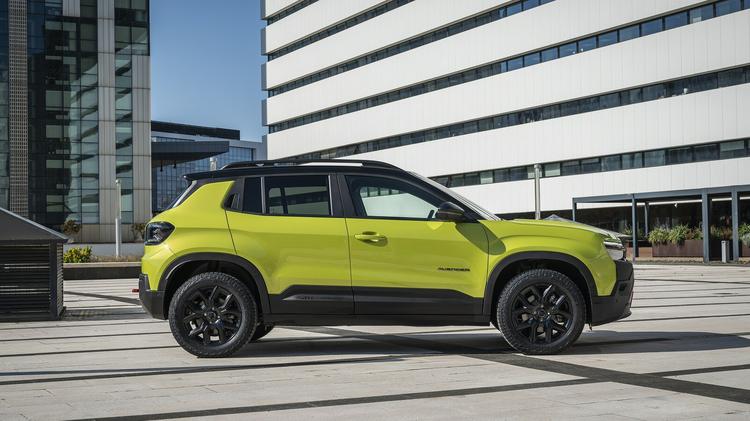
JEEP AVENGER ELECTRIC HATCHBACK.
115kW e-85th Anniversary 54kWh 5dr Auto

Contact Us